I have this bad habit that whenever I accomplish something, I’m compelled to write about how I did it. We just launched Dragonfly Fund IV, a $650M crypto VC fund (at a time that half of the media seem to believe that crypto is dead–again). We have ~$4B under management, we have about 45 people across NYC, SF, and Singapore, and we’re now one of the largest VC platforms in...
read more

We’re a crypto fund. If anyone should believe in crypto, it’s us. And yet, when we sign a deal to invest into a startup, we don’t sign a smart contract. We sign a legal contract. The startup does the same. Neither of us are comfortable doing the deal without a legal agreement. Why? We have lawyers. They have lawyers. We have engineers who can write and audit smart contracts, and...
read more

It’s that time again—as 2025 comes to a close, it’s time to drop 2026 predictions. I think 2026 is going to surprise, both to the upside and to the downside. Organized by category: Macro / Chains $BTC is > $150K by year-end, but BTC dominance decreases in 2026. Despite the excitement around the recent crop of fintech chains, their metrics will underwhelm. Daily active addresses, stablecoin flows, and RWAs—Tempo, Arc,...
read more
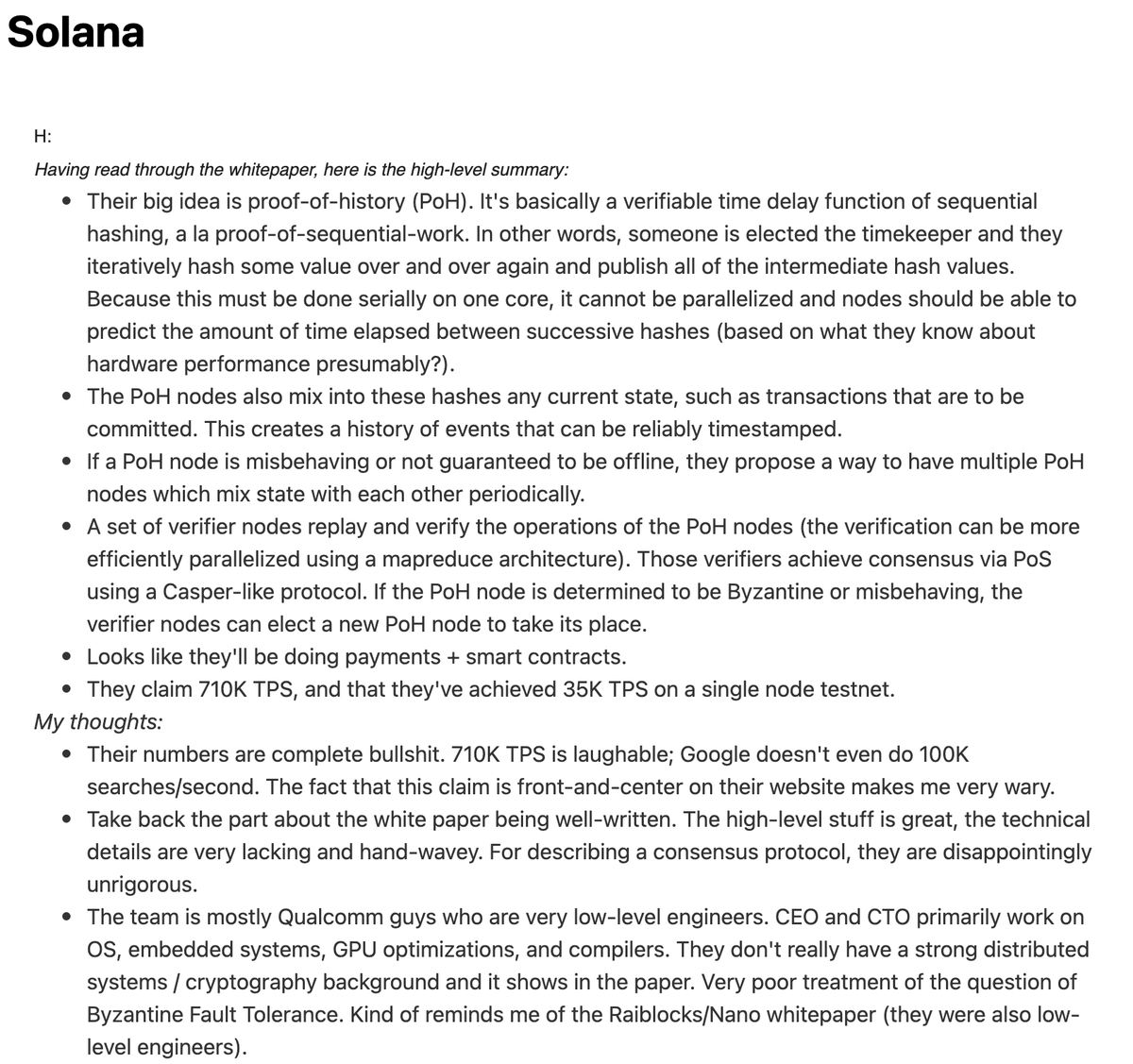
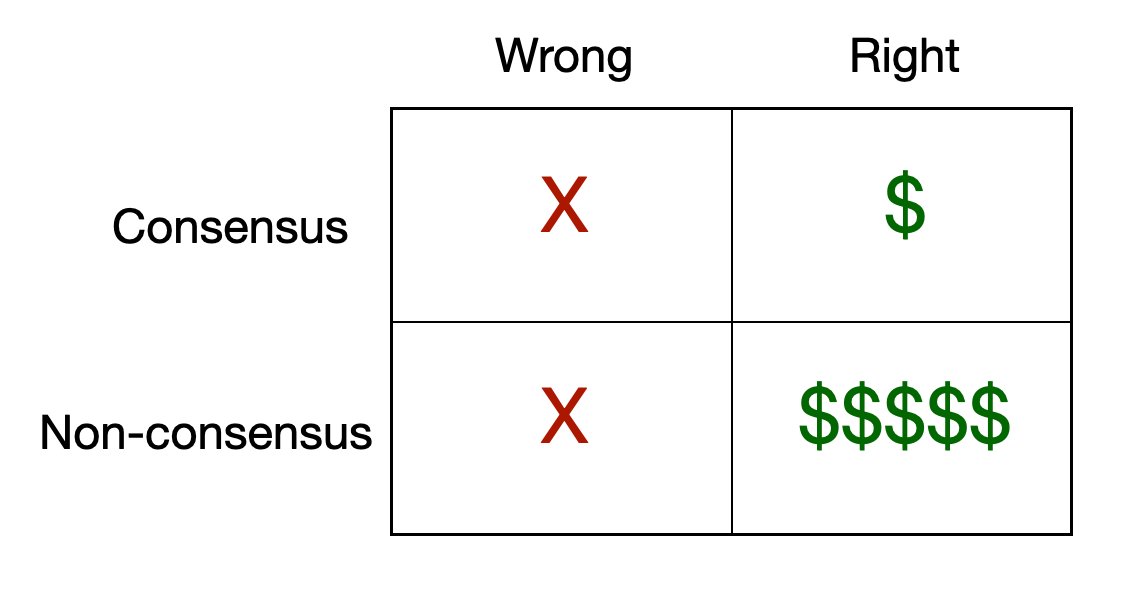
I passed on @solana’s seed round in early 2018 at $0.04. At current prices, that’s a 3,250x. Solana was one of my first ever pitches as a junior VC, and back then I wrote memos for every deal I passed on (adorably naive and overconfident). Re-reading this memo now is peak junior VC cringe. At the time we were obsessed with “Ethereum killers,” consensus protocols, and what was going to...
read more
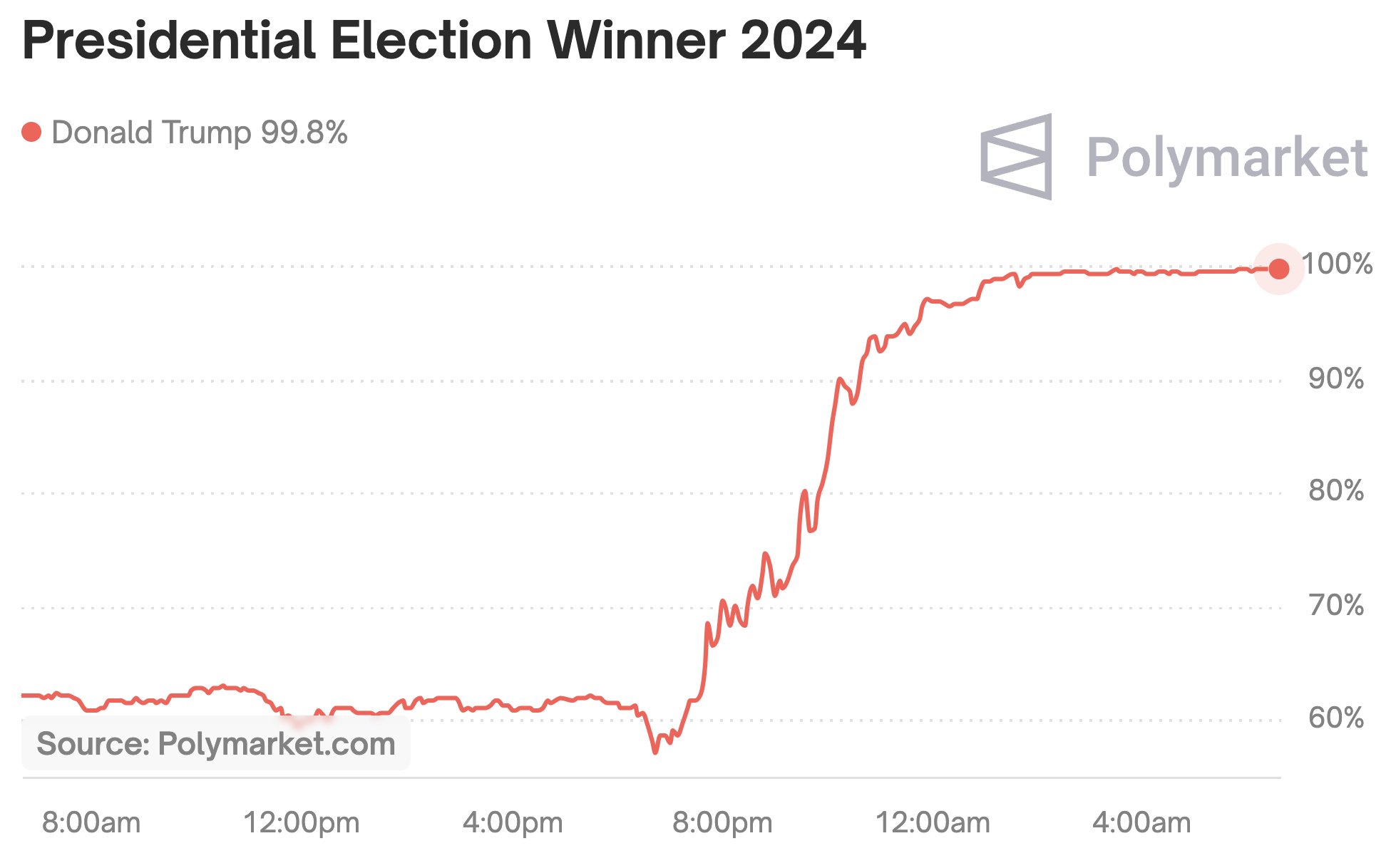
As the dust settles on the election, there’s a story that the WSJ and NYT didn’t tell you. While the mainstream news was busy with their TV pageantry and hedging on calling key swing states, Polymarket, the world’s biggest prediction market, had already delivered its verdict by midnight EST, declaring Trump was 97% likely to win. This was before the media called even a single swing state. All throughout this...
read more

The word “community” is thrown around a lot in crypto. Too many founders misunderstand what it means.
Hype is not community. You can build a big brand and still not have a community.
Because community is not what you give to your users. It’s what your users give to each other.
Originally published on X, July 2024.
read more
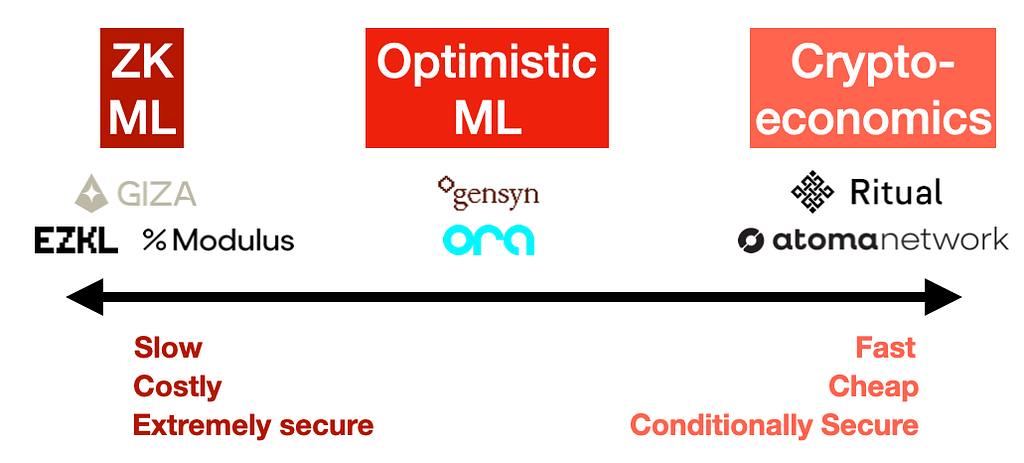
Say you want to run a large language model like Llama2–70B. A model this massive requires more than 140GB of memory, which means you can’t run the raw model on your home machine. What are your options? You might jump to a cloud provider, but you might not be too keen on trusting a single centralized company to handle this workload for you and hoover up all your usage data....
read more

Today, we’re excited to unveil the new face of Dragonfly. Dragonfly is the global crypto investment firm. Dragonfly includes Dragonfly Ventures, Dragonfly Liquid, and now Metastable, the oldest crypto hedge fund, which we recently acquired. Metastable is one of the longest-running funds in crypto history, co-founded in 2014 by Naval Ravikant, and was an early investor into Ethereum, Avalanche, Cosmos, Starkware, NEAR, Zcash, Filecoin, Dfinity, and Algorand. With its addition,...
read more
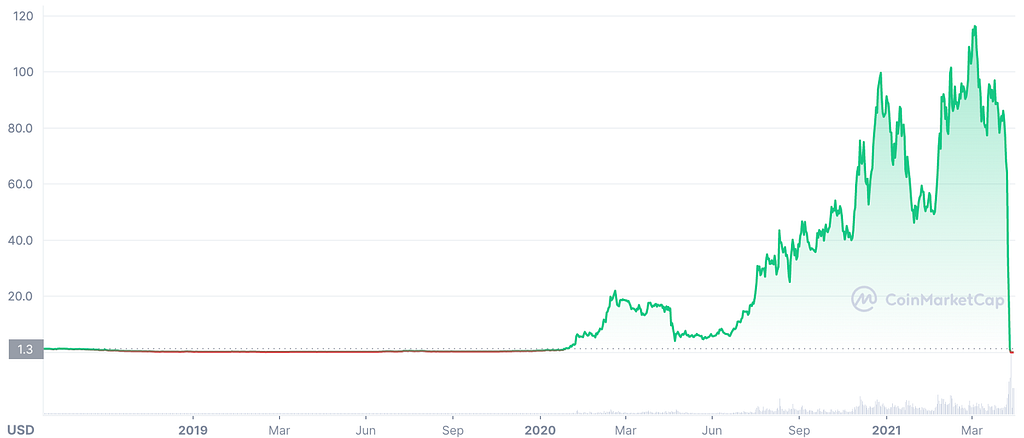
Terra will be remembered as the apotheosis of the 2020 crypto bull market. It started from humble beginnings as an experimental stablecoin. But in the span of a single year, Terra went from one of the best performing assets of this cycle to the most spectacular collapse a major cryptoasset has ever seen. The effects of its failure will reverberate through the industry for years to come — the perception of DeFi and...
read more

I’m proud to announce the launch of Dragonfly Fund III, a $650M venture fund. It’s our largest one yet. We’ve grown, and with this newest fund we’ll be backing the most disruptive founders, protocol builders, and hackers of this generation. We used to talk about how the revolution was coming. Well, it’s here now. Crypto has gone mainstream, but we’ve been doing this from the beginning, before any of it...
read more
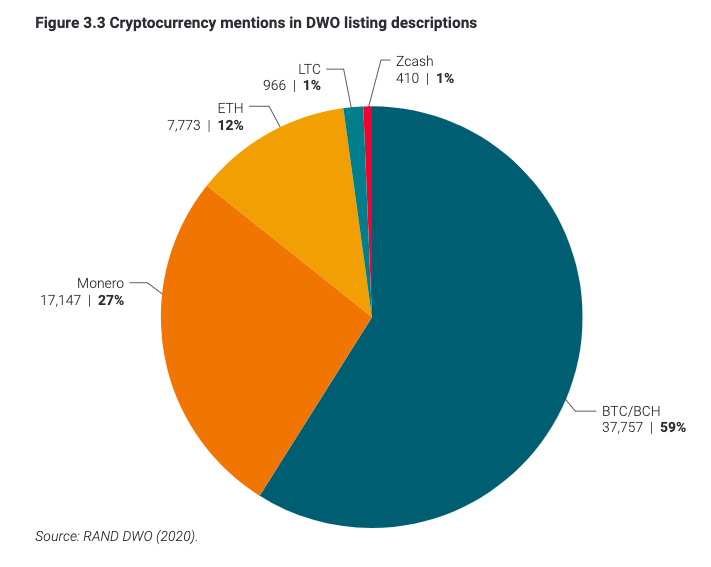
The “Cypherpunk’s Manifesto” begins, “Privacy is necessary for an open society in the electronic age.” But privacy coins — cryptocurrencies with strong privacy features — have failed to take off. Monero and zcash are both worth less today than what they were worth in 2018. In comparison, ETH is worth more than twice its 2018 high. That’s just price, but the adoption metrics haven’t fared much better. Even on darknet markets, where you’d expect privacy...
read more

Will we live in a multi-chain world, or will there be “one chain to rule them all”? It depends on your mental model of what blockchains are. People usually describe L1 blockchains as networks, e.g. the Ethereum network, the Solana network. This implies that blockchains are endlessly extensible like the Internet, or Telegram, or Facebook. If blockchains are networks, then network effects will dominate, and one blockchain will win. But networks are...
read more
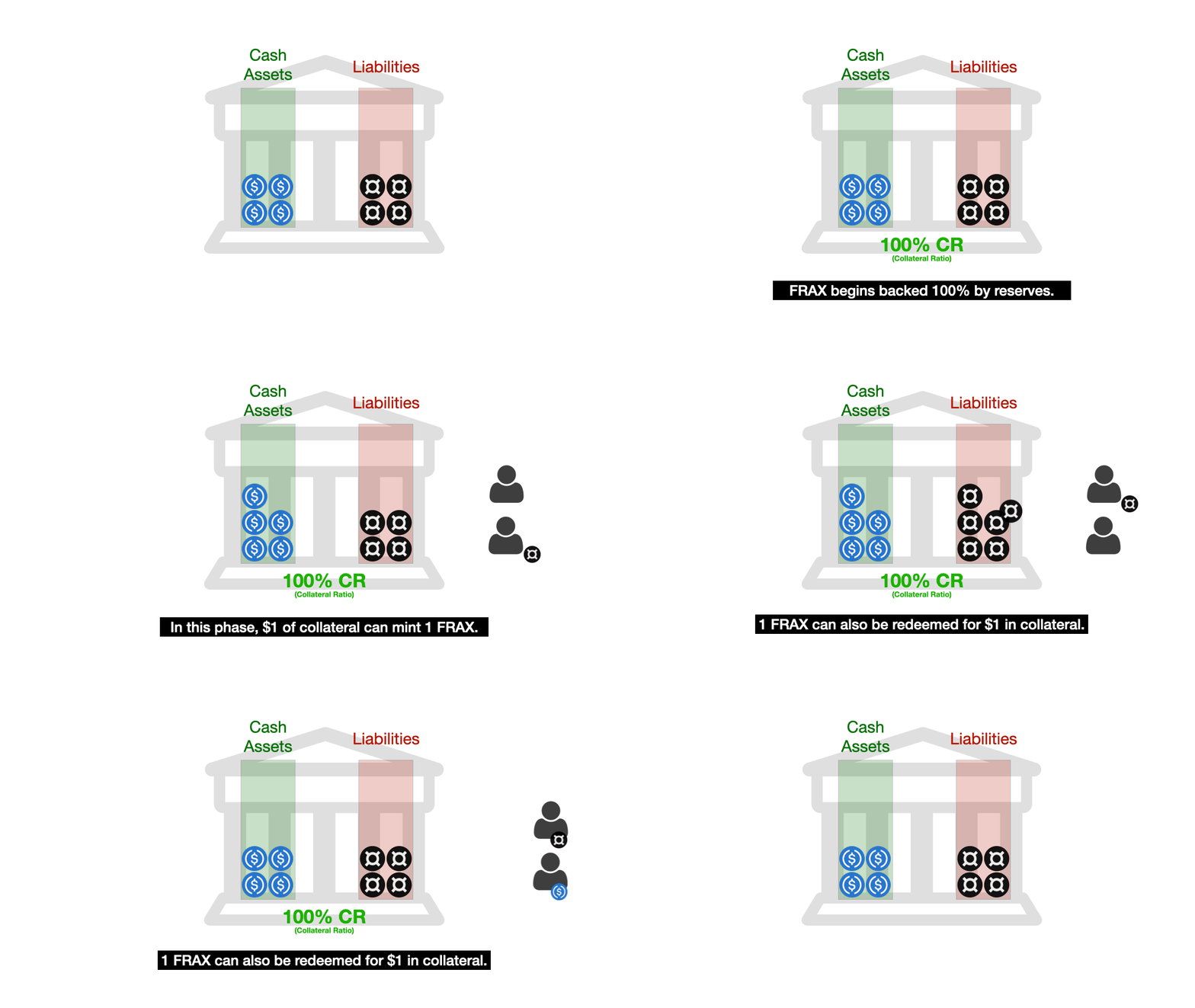
Of all the stablecoins I’ve analyzed, FRAX is the hardest to categorize. Most stablecoins are either overcollateralized, not collateralized at all, or their collateral level is solely dependent on the volatility of crypto. FRAX is unique; it is the most central bank-like of algorithmic stablecoins I have seen. If you take a real central bank, most of their assets are other sovereign currencies. Similarly, the assets on FRAX’s balance sheet are other...
read more
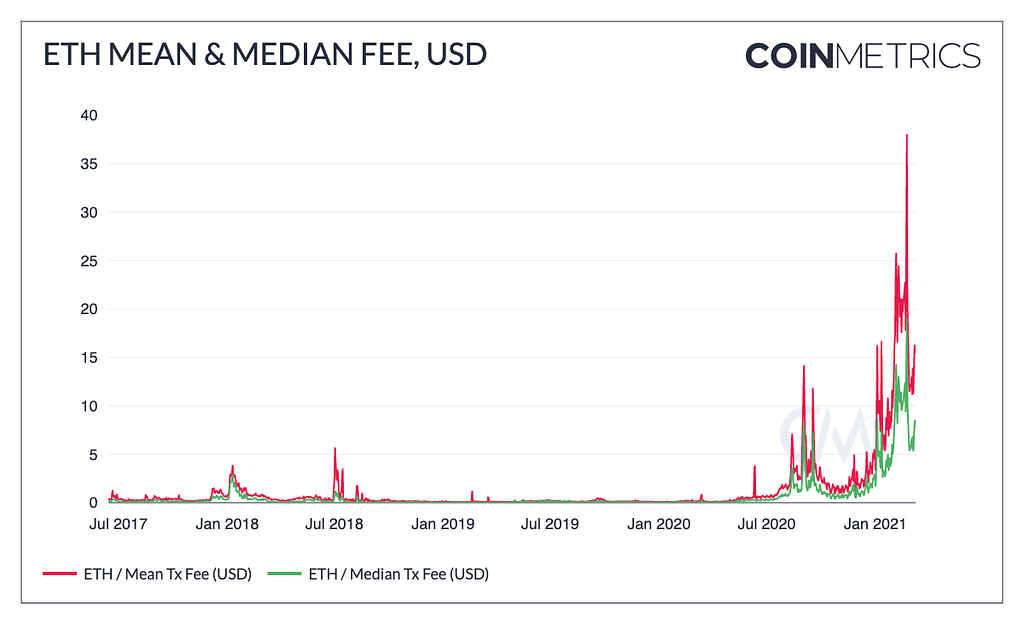
The biggest story in Ethereum over the last 6 months has been the explosion in transaction demand. Transaction fees have crossed all-time highs, and many everyday users are now priced out of using Ethereum. ETH fees in USD. Credit: Coinmetrics But worry not. A savior has emerged. Of course, I’m talking about rollups. Vitalik has anointed rollups the future of Ethereum scaling. Leading rollups have now received over $100M in venture...
read more
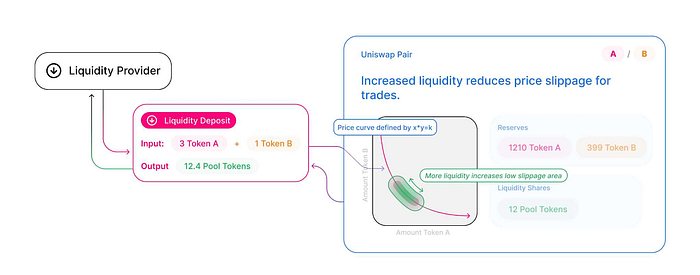
Uniswap today is the single largest “exchange” on DeFi. It routinely posts volumes larger than most centralized exchanges. Uniswap has revolutionized DeFi, brought billions of dollars in trading volume, and sparked a Renaissance in AMM (automated market maker) design. In my previous post, I explained how Uniswap works and why AMMs are dominating DeFi trading volume. But I believe it’s inevitable that Uniswap is going to be unbundled. I know...
read more

Ethereum today is incredibly congested—it’s even more congested now than it was during the height of the ICO bubble. This is impressive, but also worrying! Ethereum 2.0 is still a ways away, but the tiny island of Ethereum 1.0 is already populated to the point of saturation. Artist’s rendition of Ethereum 1.0 (source) You’ve probably heard that Ethereum 2.0 is going to be sharded. Beyond base scalability improvements, sharding is how...
read more
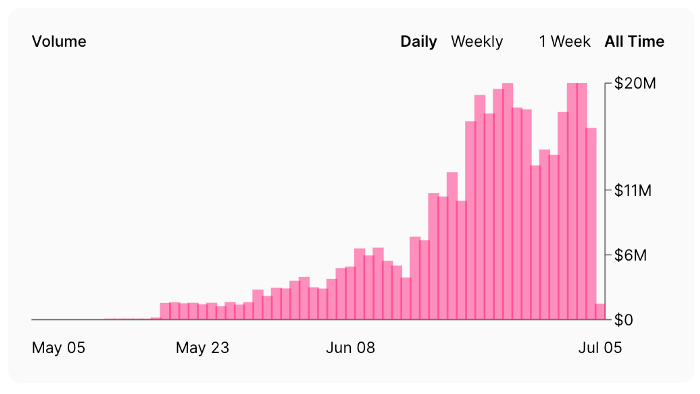
Imagine a college friend reached out to you and said, “Hey, I have a business idea. I’m going to run a market making bot. I’ll always quote a price no matter who’s asking, and for my pricing algorithm I’ll use x * y = k. That’s pretty much it. Want to invest?” You’d run away. Well, turns out your friend just described Uniswap. Uniswap is the world’s simplest on-chain market making...
read more

If you’ve spent any time at all on crypto Twitter, you’re familiar with the web3 narrative. It goes like this: in the beginning, the web was “truly decentralized.” Against all odds, the World Wide Web won against the corporatist designs of companies like Microsoft, and cyberspace became the territory of hobbyists and hackers. The Internet was henceforth enshrined as a neutral platform. And any publisher, no matter how small or...
read more

Flash loans have been the center of attention lately. Recently two hackers used flash loans to attack the margin trading protocol bZx, first in a $350K attack and later in a $600K copycat attack. These attacks were, in a word, magnificent. In each attack, a penniless attacker instantaneously borrowed hundreds of thousands of dollars of ETH, threaded it through a chain of vulnerable on-chain protocols, extracted hundreds of thousands of dollars in...
read more

By Haseeb Qureshi and Ashwin Ramachandran It was August 2017. The price of Ether was near an all time high, the Ethereum blockchain was exploding with usage, and the chain was buckling under the ever increasing demand. Researchers and developers were frantically searching for new scalability solutions. At blockchain conferences around the world, developers debated scaling proposals. The Ethereum community was desperate for a solution. In the middle of this...
read more

Today I’m launching Introduction to Cryptocurrency, an online course teaching the basics of programming cryptocurrencies. The first two modules are already released, and the remainder of the course will be coming out over the next few months. Introduction to Cryptocurrency is a multidisciplinary exploration of cryptocurrencies from the ground up, spanning computer science, history, cryptography, and economics. The course has nine modules in total: History: money, the cypherpunks, and Satoshi...
read more

On-chain lending has become the most popular decentralized finance (DeFi) application today, with over $600M in loans originated this year across MakerDAO, Compound, and dYdX. On-chain lending has the potential to disrupt traditional secured lending. But it seems it may do more than that: it might also disrupt proof of stake consensus. Proof of Stake (PoS) in an alternative to Proof of Work in which a blockchain is protected by staked cryptoassets instead of by...
read more

By Haseeb Qureshi and Leland Lee After the DAO hack of 2016, the Ethereum community was faced with an existential quandary: should the community roll back the chain to revert the DAO hack, or let the hacker get away? Those who said yes forked away to what is now called Ethereum. But those who said no, who didn’t roll back, they are now known as Ethereum Classic. This is a classic...
read more
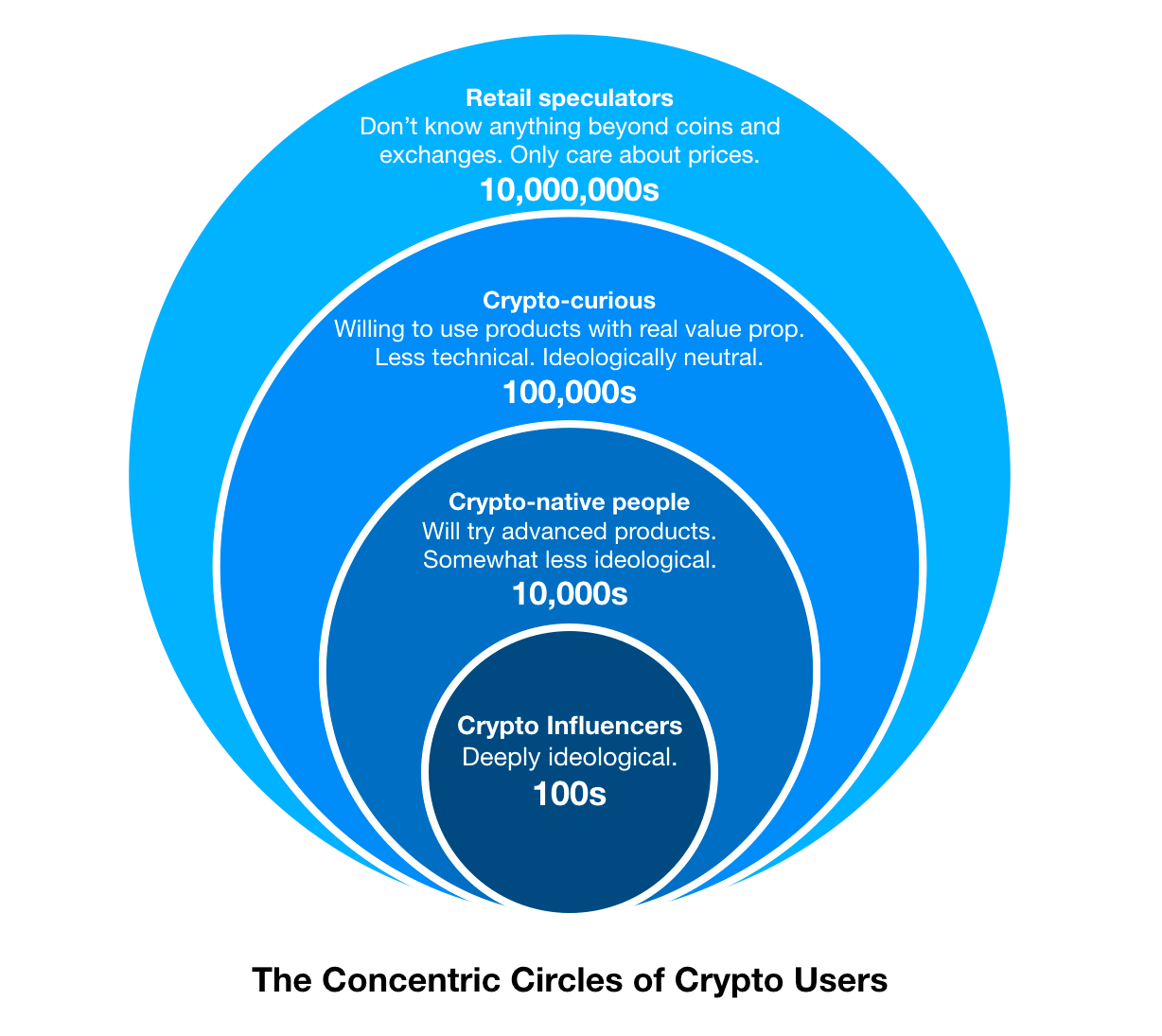
I’m a crypto VC. That means I spend my days talking to crypto entrepreneurs, hearing pitches, and evaluating products. The first thing you realize working in this industry is that pretty much everyone is winging it. (That applies to me, but it especially applies to founders.) Crypto moves at a lightning pace compared to most industries, but there’s no good blueprint for what we’re doing here. We don’t know how large the market will...
read more

When Satoshi Nakamoto designed the Bitcoin protocol, he had the insight to include the notion of transaction fees. These fees incentivized miners to include transactions into blocks. But initially, Bitcoin did not have, in any meaningful sense, a fee market. A large portion of early Bitcoin transactions were completely free up until 2013 (blue in the above chart). Wallet developers eventually hard-coded tiny fixed fees into their clients, thought of...
read more

Here’s a question: why are money transfers so expensive? Visa charges 3% + $0.30 on every US transaction. That’s a lot to charge for shuffling around numbers in some databases. After all, everything in a credit card transaction is already digital—from the online payments gateway, to the credit card company’s systems, to your bank’s database, to the Fed account where your bank parks its reserves. It’s packets and bytes all...
read more
We can safely say the ICO bubble is over now. When the bubble finally popped last year, the “market cap” of all crypto fell over $700B, an 85% drop from its peak in January - steeper than the dotcom bubble’s 78% crash. The media gawked at this collapse, and as usual, proclaimed this was the nail in the coffin for cryptocurrencies. There’s already been enough hysterics and I-told-you-sos. In this essay, I...
read more

Most cryptocurrency pioneers would not call what they’re building “institutions.” The term reeks of centralization—it’s too unsexy. (Except when it’s “institutional capital”, then it’s welcomed with open arms.) In a recent debate between Paul Krugman and Katie Haun on cryptocurrencies, Krugman is asked why he rejects the decentralized vision behind cryptocurrencies. He responds: “We developed this socially ingenious thing: enduring institutions […] and it’s going to be really, really hard...
read more

When I first heard of Bitcoin, it sounded like something out of a dystopian sci-fi novel. Digital, cryptographic, uncensorable money? It seemed such a radical idea, it couldn’t possibly belong in this decade. But if it did—if Bitcoin were to go mainstream—I was convinced it would lead to a massive geopolitical disruption, shifting the power relations between governments and their citizens. It would mean investing into Bitcoin would be like...
read more

How do you govern a blockchain? That might sound like a strange question. In theory, blockchains aren’t supposed to be governed at all—they’re supposed to be “permissionless decentralized ledgers.” But a blockchain is more than just a ledger. It’s also an ecosystem of software, an economy of merchants, companies, and exchanges, and beneath all that, a community of developers, miners, and users. At the end of the day, blockchains must...
read more

A useful currency should be a medium of exchange, a unit of account, and a store of value. Cryptocurrencies excel at the first, but as a store of value or unit of account, they’re pretty bad. You cannot be an effective store of value if your price fluctuates by 20% on a normal day. This is where stablecoins come in. Stablecoins are price-stable cryptocurrencies, meaning the market price of a...
read more

Cryptocurrencies, ICOs, magic internet money—it’s all so damn exciting, and you, the eager developer, want to get in on the madness. Where do you start? I’m glad you’re excited about this space. I am too. But you’ll probably find it’s unclear where to begin. Blockchain is moving at breakneck speed, but there’s no clear onramp to learning this stuff. Since I left Airbnb to work full-time on blockchain, many people...
read more

Cryptocurrencies have a trust problem. Blockchain evangelists claim that with the advent of Bitcoin, centralized authorities and financial institutions will soon become obsolete. Blockchain technology will run the world and corruption will be engineered out of existence. Society will become “trustless.” Ironically, the vast majority of people still don’t trust cryptocurrencies. [video] The evangelists claim those people don’t understand the technical innovations behind blockchains. (As though a lecture on consensus...
read more
It wasn’t too long ago that Silicon Valley scoffed at cryptocurrencies. All over coffee shops in Mountain View and Menlo Park, you heard the same conversation: “Sure, it’s cool technology, but when are we going to see the killer app”? A few merchants dipped their toes into accepting Bitcoin in 2014. But adoption largely backed off. I remember seeing a few Bitcoin ATMs in Austin, and then they disappeared. Bitcoin...
read more

Yesterday, a hacker pulled off the second biggest heist in the history of digital currencies. Around 12:00 PST, an unknown attacker exploited a critical flaw in the Parity multi-signature wallet on the Ethereum network, draining three massive wallets of over $31,000,000 worth of Ether in a matter of minutes. Given a couple more hours, the hacker could’ve made off with over $180,000,000 from vulnerable wallets. But someone stopped them. Having...
read more

Imagine you didn’t need to trust a stranger to make a deal with them. Imagine you didn’t need to trust your bank to deposit your money there. Imagine you didn’t need to trust your government to know it was being just and fair. What would happen? It would change the world. This is precisely the promise of blockchains. Cryptocurrencies, which are built on blockchains, are all over the press these...
read more